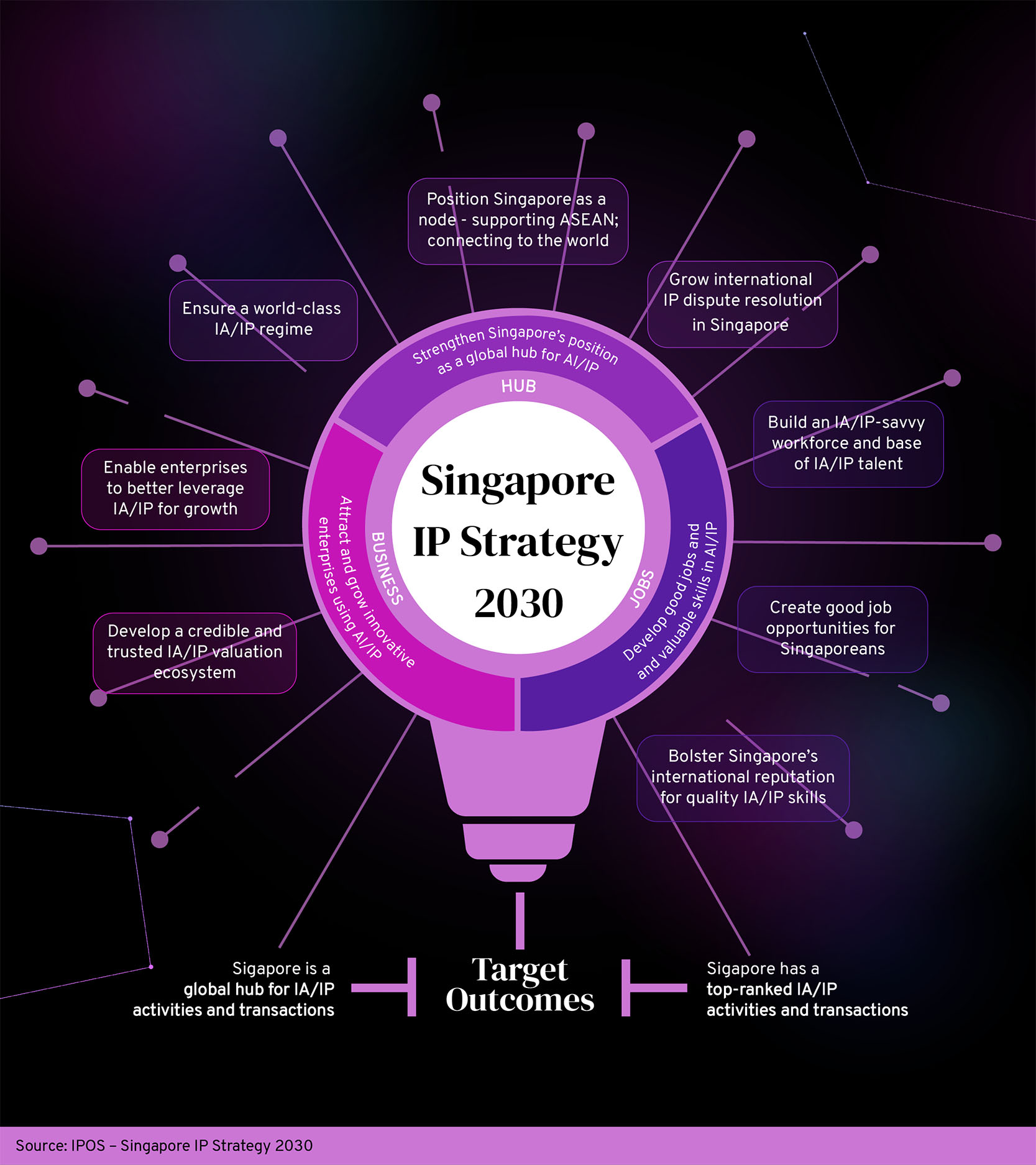
What stood out most was how the country incentivizes creativity and implements IP laws with remarkable efficiency. From registering a business, to maintaining one, and even to closing one—every process is seamless, transparent, and digital-first.
It’s a system designed to sustain startups, support creative teams, and nurture innovation from the ground up. In Singapore, creativity isn’t simply encouraged—it’s built into the country’s infrastructure.
Learning from the Best Global Startup Hub
For Philippine startups like Mata Services, the contrast is striking.
Singapore’s ecosystem offers unmatched advantages: clear business regulations, digital governance, and an IP office that’s both responsive and globally aligned. However, these benefits come with one major challenge—the high operational cost.
For Filipino creative and tech companies looking to scale, fully setting up in Singapore can be expensive. That’s why, during my visit, I began thinking of a hybrid solution, one that blends the best of both countries:
- Keep project management, client relations, and intellectual property registration in Singapore.
- Outsource software development, design, and creative production to the Philippines.
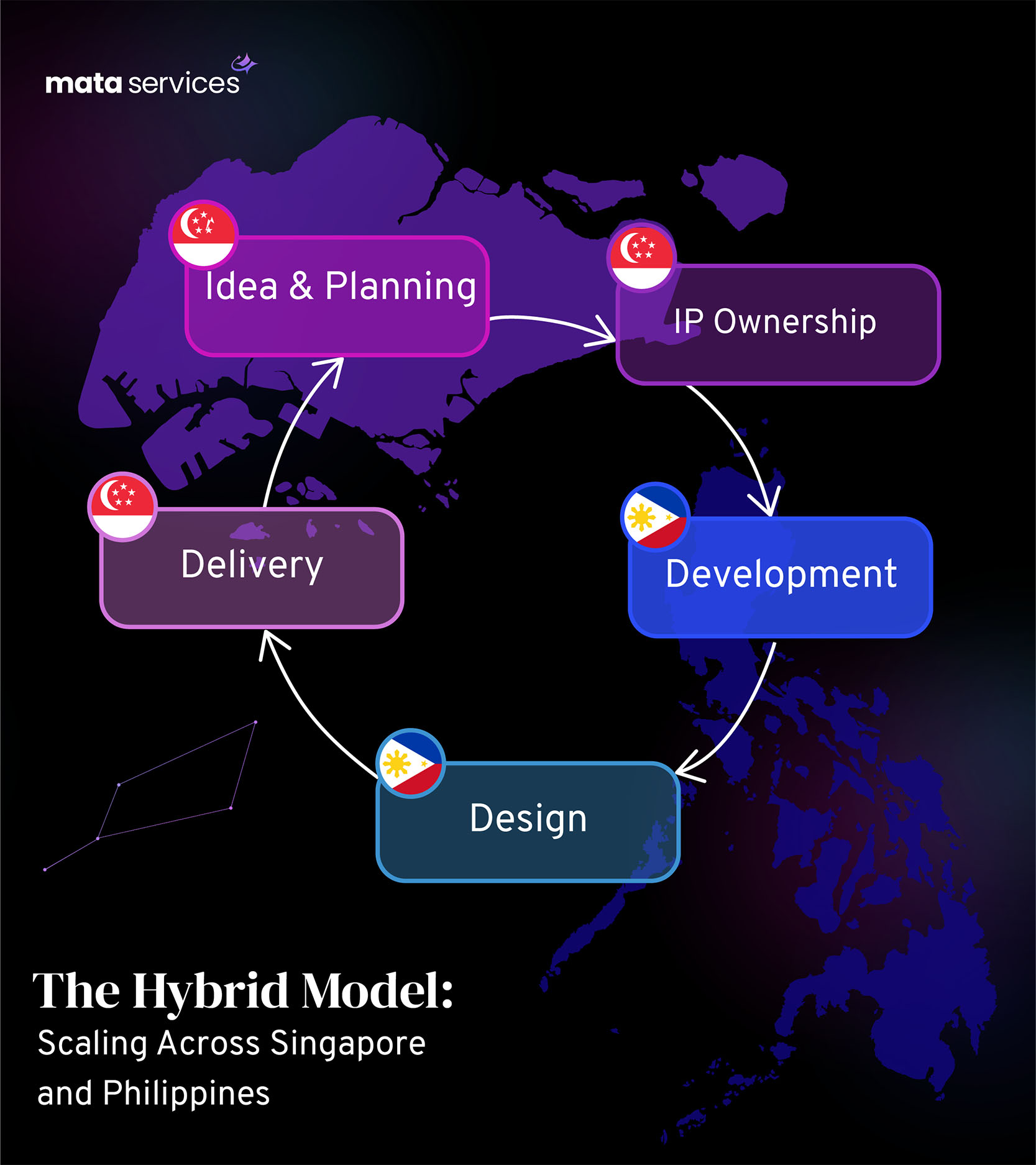
Proposed hybrid model between startups in Singapore and the Philippines
This strategy can both save costs, and also, amplify value. It combines Singapore’s structural efficiency with the Philippines’ creative depth and team flexibility, creating a cross-border model that’s scalable and sustainable.
In short, it’s a partnership that demonstrates how startup support and staff augmentation can drive global innovation when built on trust and shared expertise.
Team Solutions for the New Economy
In today’s startup landscape, agility is everything. Having great products is not enough for success, because the most successful ventures now are powered by teams that adapt quickly, manage complexity, and innovate continuously. The truth of the matter is that if global companies want to keep up, finding the right team can be a lifeline.
Singapore understands this deeply. From incubation programs to innovation grants, the government offers team-based support systems designed to help startups grow beyond their founding teams. Whether it’s access to digital skills training, mentorship networks, or R&D partnerships, every layer of the ecosystem is built around empowering people.
For the Philippines, this presents an opportunity.
Filipino professionals have long been known for their creativity, communication skills, and collaborative mindset. What’s missing is a stronger bridge between that talent and global startup ecosystems.
That’s where staff augmentation comes in.
Instead of traditional outsourcing, staff augmentation allows companies to extend their in-house capabilities by integrating skilled Filipino designers, developers, and project managers into their global teams. It’s a modern model of collaboration—flexible, efficient, and aligned with the digital-first world.
Building Intellectual Property, Not Just Projects
Singapore also offers something the Philippines is still developing and that is structured pathway for startups to scale globally through IP-based IPOs. These are initial public offerings built around proprietary assets such as creative technologies, patents, and trademarks.
This approach transforms startups from simple service providers into IP owners—companies with scalable, defensible value.
For firms like ours, which develop creative technologies, digital experiences, and brand ecosystems, we don’t just view IP as a legal requirement, but a growth engine that drives companies to success. This is why protecting intellectual property ensures that innovation doesn’t just serve a single project or campaign, but evolves into long-term value.
If the Philippines strengthens its IP ecosystem, from faster registration to stronger enforcement, it could empower local innovators to move from being contractors to creators. That’s the transition every creative economy needs—one that shifts from labor-based work to IP-based growth.
This is why startup support systems matter so much. They have this mindset of building ownership, and not just mere outputs.
The Path Forward for the Philippines
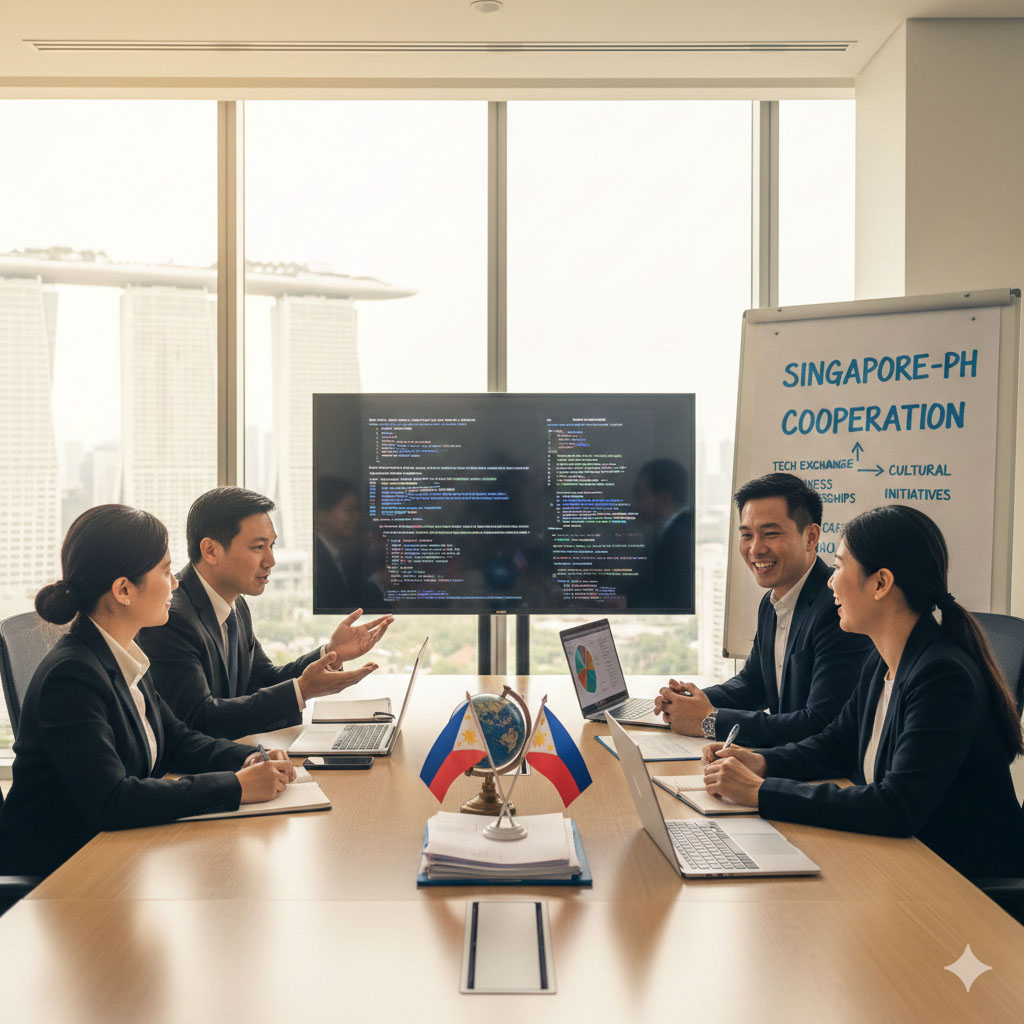
The global innovation landscape is no longer about competition; it’s about collaboration and co-creation.
Singapore has proven that when you invest in systems—not just startups itself—you create a culture where innovation can thrive. The Philippines, on the other hand, has shown the world what creative talent can do, even with limited infrastructure.
The next step is to combine these strengths.
At Mata Services, we’re focused on bridging that gap. Through strategic staff augmentation, creative project collaboration, and digital transformation, we help startups and enterprises build scalable solutions that connect Asia’s innovation ecosystems.
Because the future of the creative economy won’t come from working in silos—it will come from shared growth. When Singapore’s structure meets the Philippines’ creativity, we create a new kind of value: ideas that scale across borders.
Final Thought
The Philippines has the creative power.
The world already recognizes our talent.
Now it’s time we build the systems that let that creativity scale globally—through better IP frameworks, stronger startup support, and dedicated teams.
As Singapore shows, innovation thrives where ideas, technology, and people move freely. The Philippines’ creative economy can become a global force, through collaboration and people-driven innovation.
At Mata Services, we help startups and enterprises scale smarter through team solutions, staff augmentation, and creative collaboration.