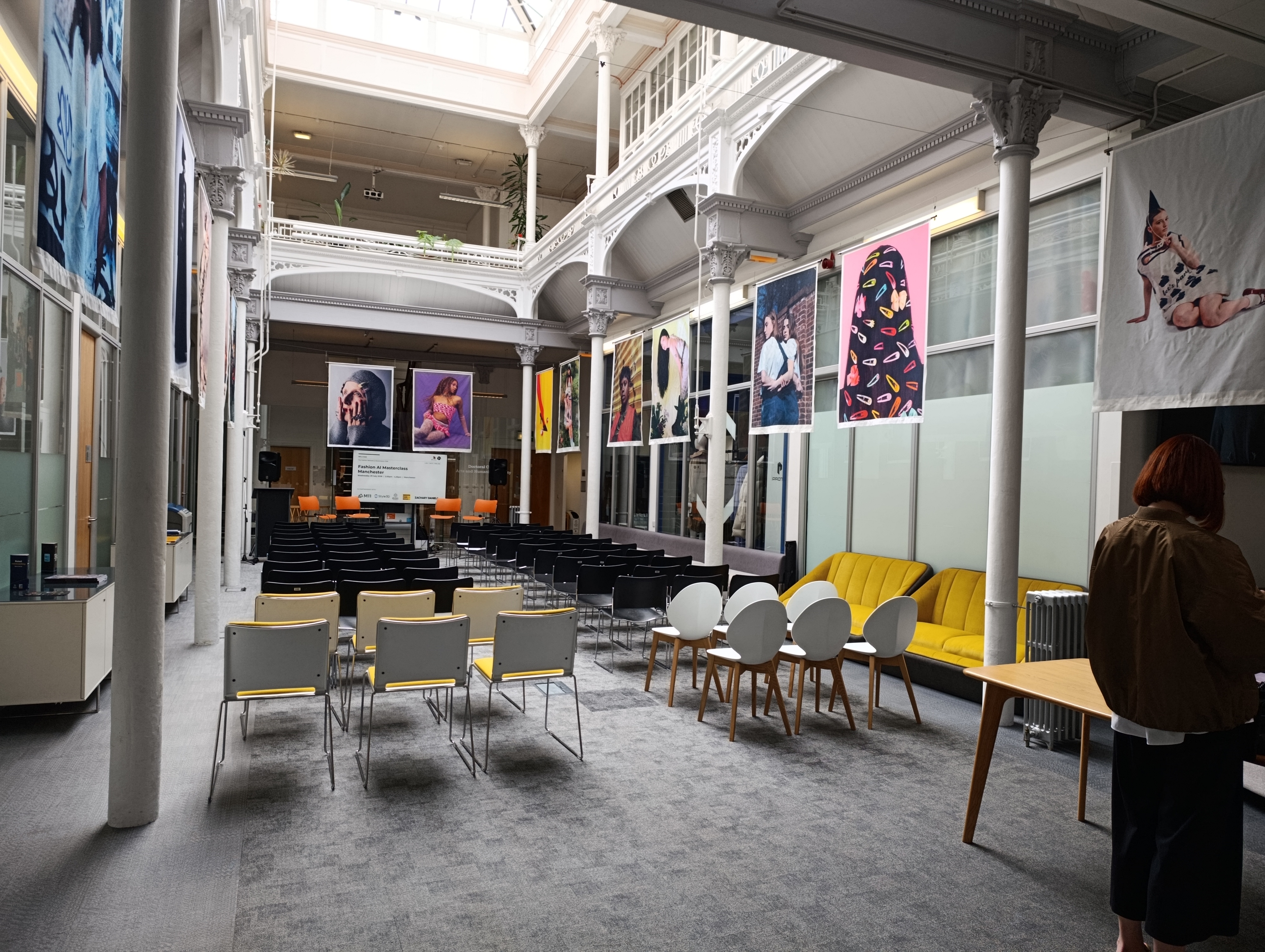
There’s a shift taking place in how companies need to think about being discovered online and how new tech cities can provide opportunities for founders, and we learned about it on our recent trip to Manchester earlier this year. Bastian Lauer, co-founder of Mata, planned to attend just one event in Manchester: A Manchester Fashion Institute event about AI, with the goal to learn how to help Mata's ecommerce clients with the swtich to AI. Once he was in Manchester, he noticed that hotels were cheaper than in London, so he decided to stay a bit longer and explore the city more. That’s how one event became three: in addition to the AI masterclass, he added Silicon Mingle, a founder meetup, and the Venture Café Manchester, where he attended the Silicon Sessions Roundtable. The masterclass showed the clearest idea of the trip: AI is no longer taking brands at their word.
From SEO to proof. Brands can't just say it anymore
The clearest story of this showed up at the AI masterclass, where one repeating idea was the “zero-trust internet” that the speakers emphezied. In a traditional way of searching, a brand could describe or make claims about themselves however it liked and let the SEO take care of it. But AI does not necessarily work that way. If a brand claims to be sustainable, for example, the information accessible to AI needs to be backed by evidence, certifications, or any proof that can support the claim. Without that proof, a brand is exposed to the risk of lacking credibility and visibility in an AI-driven search experience.
That redefines what “optimizing a website” means. It’s no longer about keywords and backlinks only. It is also about providing verifiable and readable information on your website for the AI to process. Such as FAQ content, real documentation, certifications, and other proof that would back up the things that a brand would say about itself. Of course, this is not just about ecommerce brands, but any company with a website.
The winner-takes-all problem
The challenges and implications of that shift are bigger than one might realize at first. A traditional Google search can give pages of options. An AI shopping experience, however, can narrow down those choices to a smaller batch of recommendations that is ultra specific to a single customer or user. It’s similar to marketplaces such as Amazon where only the most competitive sellers will get listed first in a specific category and make a sale.
For fashion labels using e-commerce and really any other companies with a website, that engage with Mata for help, that narrows the margin for error significantly. Being discovered through an AI search experience may become less about tradtiontal SEO rankings and more about building a library of information that is verifiable and makes AI agents recommended your company. Think of AI as a new kind of critical customer for your business.
AI as collaborator, not replacement
Not every AI story from the business trip was about being judged by machines; some were about working with AI. One part of the masterclass at Manchester Fashion Institute described a project with a Southeast Asian manufacturer of clothing that digitized fifty years of clothing collections and patterns into a custom AI model. Now designers and mdarketers use the tool to generate new ideas from the decades of the company’s experience, not as a replacement for the people that work for the company, but as a way of amplifying what they could already do.
That difference mirrors something Bastian said about how Mata should approach AI too. "If Sarah produces 10 apples without AI, the goal is not that Sarah gets fired and AI produces 10 apples. The goal is for Sarah to produce 100 apples with AI." The technology in these events was not about doing away with expertise; it was about amplifying the capabilities of people. It is worth mentioning though that many attendees of the AI masterclass had questions about the sustainability of AI, because while they like to use AI more, they are concerned with the environmental impact of AI. It's an important question for many fashion luxury brands, because their customers hold them to high ethical and sustainable standards when it comes to how they conduct their business.
Manchester's quiet advantage
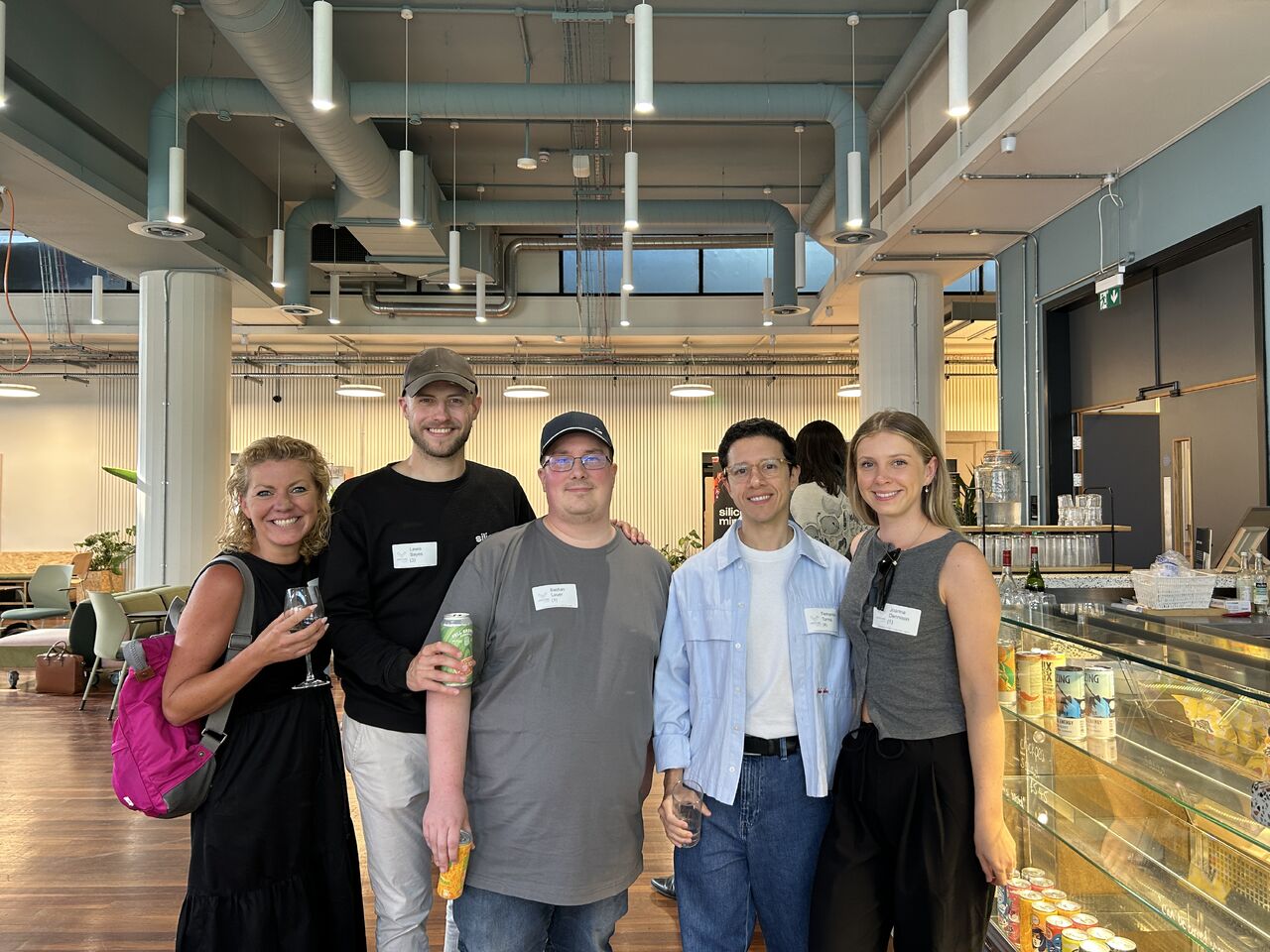
The two events, aside from the AI Masterclass, were Silicon Mingle and Venture Café. This was not about AI or e-commerce, but about technolgy and startups and provided a very interesting experience. It served as a reminder hat some of the most interesting activity is not happening in the cities that most people pay attention to. Of course, San Fransico and London have large tech ecosystems, but Manchester has an amazing founder culture as well.
Silicon Mingle, held in a pub in Manchester, attracted a mix of founders working in startups covering anything from software to deep tech such as synthetic biology. Venture Café gave a different angle of the city’s startup ecosystem, attracting founders and scientists working around agri-tech, food security and sustainability. The focus is different very Thursday which speaks for the breath of the tech ecosystem of this city.

Inside Manchester's Founder Conversations
The Venture Café gathering gave Bastian a look at how the founders and scientists in Manchester approach the problems they are trying to solve. He attended the Silicon Sessions Roundtable where founders could discuss the problems they were facing and exchange ideas with fellow founders in the room.
The session was part of a much larger event called “Growing Northern Food Futures: Manchester’s AgTech Pioneers” under the Venture Café Manchester Thursday Gathering. The event program included founder pitches, a panel on the next AgTech revolution and a workshop on plant-rich food systems. But Bastian’s experience was focused on the roundtable conversation.
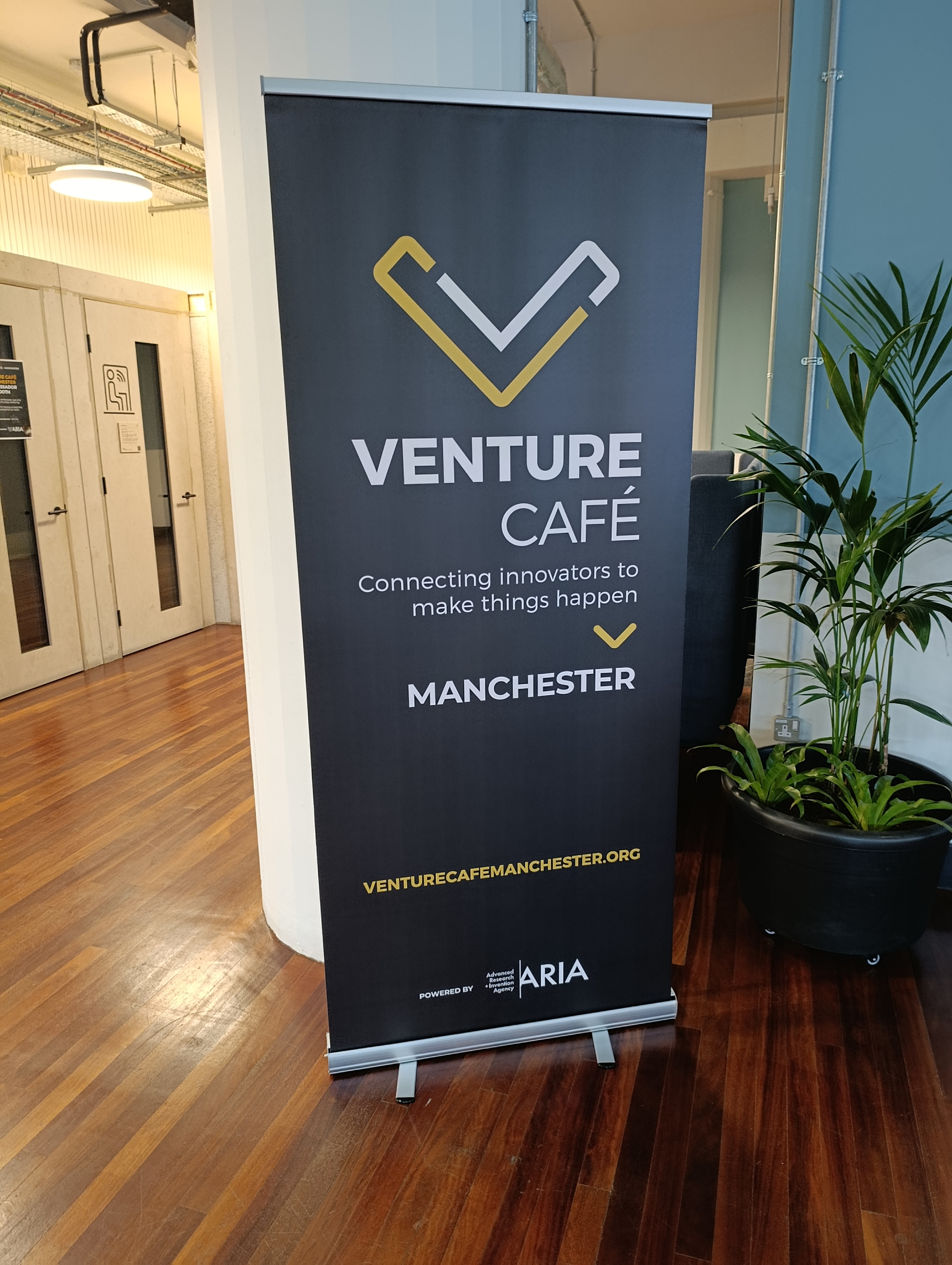
What stood out was the value of creating a place where founders could exchange problems, solutions, and ideas rather than presenting success stories. For Bastian, that made the session notably useful as a founder himself: the value was in being able to discuss real challenges and problems, to hear how others approached theirs, and build connections from those conversations.
What this means going forward
When putting these 3 events together, they all point to a much broader change: technology is changing how businesses are found online, how products are being developed, and how founders approach challenges. For Mata, that means treating AI search with the same gravity as SEO, staying closer to clients’ business models instead of just their tech stacks, and, per Bastian’s closing takeaway from the trip, being willing to look for opportunities in places you least expect them.
About the author
Kranz Dorio is a Content Writing and Marketing Intern at Mata Technologies, where he focuses on research, writing, and developing content for the company’s news blog.